


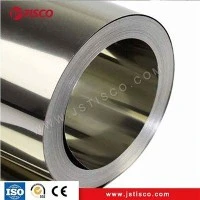


As a trusted supplier of Stainless Steel Coil, I often receive inquiries from customers about how to test the magnetic property of stainless steel coils. Understanding the magnetic properties of stainless steel is crucial, as it can significantly impact the material's performance in various applications. In this blog post, I will share some effective methods to test the magnetic property of stainless steel coils and explain why these tests are important.
Why Test the Magnetic Property of Stainless Steel Coils?
Stainless steel is a versatile material known for its corrosion resistance, strength, and aesthetic appeal. However, not all stainless steels have the same magnetic properties. Some stainless steels, such as the Stainless Steel Coil 430, are ferromagnetic, which means they are attracted to magnets. Others, like the Stainless Steel Coil 316Ti and 316L Stainless Steel Coil, are austenitic and are generally non - magnetic or only slightly magnetic.
Testing the magnetic property of stainless steel coils is essential for several reasons. Firstly, it can help in material identification. Different grades of stainless steel have different magnetic characteristics, and by testing the magnetism, you can confirm the grade of the stainless steel coil you have. Secondly, in some applications, such as electrical or electronic devices, the magnetic properties of the material can affect the performance of the product. For example, a highly magnetic stainless steel may interfere with the operation of sensitive electronic components.
Methods to Test the Magnetic Property of Stainless Steel Coils
1. Simple Magnet Test
The simplest and most common method to test the magnetic property of a stainless steel coil is to use a permanent magnet. You can take a small, strong magnet, such as a neodymium magnet, and bring it close to the surface of the stainless steel coil. If the magnet is attracted to the coil, it indicates that the stainless steel has some ferromagnetic properties.
However, it's important to note that the strength of the magnetic attraction can vary depending on the grade of stainless steel. For example, the Stainless Steel Coil 430 will show a relatively strong magnetic attraction, while the Stainless Steel Coil 316Ti may show only a very weak or no attraction at all.
2. Magnetic Susceptibility Measurement
Magnetic susceptibility is a measure of how easily a material can be magnetized in an external magnetic field. To measure the magnetic susceptibility of a stainless steel coil, you can use a magnetic susceptibility meter. This device works by applying a known magnetic field to the sample and measuring the resulting magnetization.
The advantage of using a magnetic susceptibility meter is that it provides a quantitative measurement of the magnetic properties of the stainless steel. This can be particularly useful when you need to compare different grades of stainless steel or when you need to ensure that the magnetic properties of the coil meet specific requirements.
3. Eddy Current Testing
Eddy current testing is a non - destructive testing method that can be used to detect changes in the electrical conductivity and magnetic permeability of a material. In the case of stainless steel coils, eddy current testing can be used to identify any variations in the magnetic properties along the length of the coil.
During eddy current testing, a coil carrying an alternating current is placed near the surface of the stainless steel coil. The alternating current in the coil generates a magnetic field, which in turn induces eddy currents in the stainless steel. The eddy currents create their own magnetic fields, which interact with the original magnetic field. By measuring the changes in the electrical properties of the coil, such as impedance, it is possible to detect any variations in the magnetic properties of the stainless steel.
Factors Affecting the Magnetic Property of Stainless Steel Coils
The magnetic property of stainless steel coils can be affected by several factors, including:
1. Chemical Composition
The chemical composition of stainless steel plays a crucial role in determining its magnetic properties. Stainless steels that contain higher amounts of ferrite, such as the Stainless Steel Coil 430, are more likely to be ferromagnetic. On the other hand, austenitic stainless steels, which contain high levels of nickel and chromium, are generally non - magnetic or only slightly magnetic.
2. Cold Working
Cold working, such as rolling or drawing, can also affect the magnetic properties of stainless steel. When stainless steel is cold - worked, it can undergo a phase transformation from austenite to martensite, which is ferromagnetic. This means that a non - magnetic austenitic stainless steel can become magnetic after cold working.
3. Heat Treatment
Heat treatment can also have an impact on the magnetic properties of stainless steel. For example, annealing can help to restore the original magnetic properties of a cold - worked stainless steel by reversing the phase transformation.
Importance of Accurate Magnetic Property Testing
Accurate magnetic property testing is crucial for ensuring the quality and performance of stainless steel coils. By testing the magnetic properties, you can:
- Verify the Grade: Confirm that the stainless steel coil you have received is of the correct grade. This is important because different grades of stainless steel have different properties and are suitable for different applications.
- Ensure Compatibility: Ensure that the magnetic properties of the stainless steel coil are compatible with the intended application. For example, if the coil is to be used in an electrical or electronic device, it is important to ensure that it has the appropriate magnetic properties to avoid interference.
- Detect Defects: Magnetic property testing can also help to detect any defects or inconsistencies in the stainless steel coil. For example, if there are variations in the magnetic properties along the length of the coil, it may indicate a problem with the manufacturing process.
Conclusion
Testing the magnetic property of stainless steel coils is an important step in ensuring the quality and performance of the material. By using simple magnet tests, magnetic susceptibility measurement, or eddy current testing, you can accurately determine the magnetic properties of the stainless steel coil. Understanding the factors that affect the magnetic properties, such as chemical composition, cold working, and heat treatment, can also help you to make informed decisions about the use of stainless steel in your applications.
If you are in the market for high - quality stainless steel coils and need more information about our products, we invite you to contact us for a detailed discussion. Our team of experts is ready to assist you in selecting the right stainless steel coil for your specific needs.


References
- ASM Handbook, Volume 1: Properties and Selection: Irons, Steels, and High - Performance Alloys.
- ASTM International Standards for Stainless Steel.
- Stainless Steel: A Practical Guide, by R.D. Peacock.