


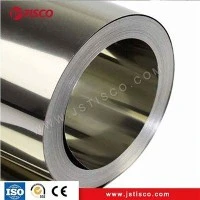


Hey there! As a supplier of 316 Stainless Steel Coil, I often get asked about the difference between 316 and 316L stainless steel coil. It's a common question, and I'm here to break it down for you in a way that's easy to understand.
Composition
First off, let's talk about what makes these two types of stainless steel coil different at the most basic level - their composition. Stainless steel gets its corrosion - resistant properties from a mix of different elements, and 316 and 316L are no exceptions.
316 stainless steel is an austenitic stainless steel. It typically contains about 16 - 18% chromium, 10 - 14% nickel, and 2 - 3% molybdenum. The addition of molybdenum gives 316 better resistance to corrosion, especially in environments with chloride ions, like coastal areas or chemical processing plants.
On the other hand, 316L is a low - carbon version of 316. The "L" in 316L stands for "low - carbon". While the chromium, nickel, and molybdenum content is similar to 316, the carbon content in 316L is restricted to a maximum of 0.03%. In 316, the carbon content can go up to 0.08%. This seemingly small difference in carbon content has a big impact on the properties of the two materials.
Weldability
One of the major differences between 316 and 316L stainless steel coil is their weldability. When you weld stainless steel, the heat from the welding process can cause the carbon in the steel to react with the chromium. This reaction forms chromium carbides, which can deplete the chromium in the area around the weld. When the chromium is depleted, the corrosion resistance of that area decreases.
316L, with its low carbon content, is much less likely to form chromium carbides during welding. This means that after welding, 316L retains its corrosion - resistant properties better than 316. So, if you're planning to do a lot of welding on your stainless steel coil, 316L is the way to go. For example, in the construction of chemical storage tanks or food processing equipment where welding is common, 316L is often preferred.
Corrosion Resistance
In general, both 316 and 316L offer excellent corrosion resistance. But as I mentioned earlier, the welding process can affect the corrosion resistance of 316. In non - welded applications, the difference in corrosion resistance between 316 and 316L is quite small.
However, in environments where the steel is exposed to harsh chemicals or high levels of chloride, like in marine applications or some industrial settings, 316L might have a slight edge. The lower carbon content in 316L makes it more resistant to intergranular corrosion, which can occur in the heat - affected zones during welding. So, if you're using the stainless steel coil in a corrosive environment and welding is involved, 316L is a safer choice.


Strength
When it comes to strength, 316 generally has slightly higher strength than 316L. The higher carbon content in 316 contributes to its increased strength. However, this difference in strength is not significant in most applications.
In applications where high strength is a critical factor, and welding is not a major concern, 316 might be the better option. For example, in structural applications where the steel needs to support heavy loads, 316 could be used. But in most cases, the difference in strength between the two is not a deciding factor.
Applications
The differences in properties between 316 and 316L stainless steel coil lead to different applications.
316 stainless steel coil is commonly used in architectural applications, such as building facades, handrails, and decorative elements. Its good strength and corrosion resistance make it suitable for these applications. You can check out our Stainless Steel Coil 316 for more details on its use in these areas.
316L, on the other hand, is widely used in industries where welding is common and corrosion resistance is crucial. In the medical industry, 316L is used to make surgical instruments and implants because of its biocompatibility and excellent corrosion resistance after welding. It's also used in the food and beverage industry for equipment like storage tanks and piping. You can find more about our Stainless Steel Strip 316 and 316 Stainless Steel Strip which are often used in these applications.
Cost
Cost is always an important factor when choosing between 316 and 316L stainless steel coil. Generally, 316L is slightly more expensive than 316. This is mainly because of the additional processing required to reduce the carbon content. However, the cost difference is not huge, and in many cases, the benefits of using 316L, such as better weldability and corrosion resistance, outweigh the extra cost.
Which One Should You Choose?
So, which one should you choose for your project? Well, it depends on your specific needs. If you're doing a lot of welding and the steel will be exposed to a corrosive environment, 316L is the better choice. It will ensure that the welded areas maintain their corrosion - resistant properties.
If welding is not a major concern and you need a bit more strength, 316 might be the way to go. Also, if cost is a big factor and you're not dealing with a highly corrosive environment, 316 could be sufficient.
As a supplier of 316 Stainless Steel Coil, I'm here to help you make the right choice. Whether you need more information about the products, want to see samples, or are ready to place an order, feel free to reach out. We can have a detailed discussion about your project requirements and find the best solution for you.
In conclusion, understanding the differences between 316 and 316L stainless steel coil is crucial for making the right decision for your application. By considering factors like composition, weldability, corrosion resistance, strength, applications, and cost, you can choose the material that best suits your needs. So, don't hesitate to contact us if you have any questions or if you're interested in purchasing our high - quality stainless steel coils.
References
- ASM Handbook Committee. (2004). ASM Handbook, Volume 13A: Corrosion: Fundamentals, Testing, and Protection. ASM International.
- Schaeffler, A. L. (1949). Constitution diagram for stainless steel weld metals. Welding Journal, 28(5), 210s - 220s.