




When it comes to the construction and manufacturing industries, carbon steel bars are a staple material. They are used in a wide range of applications, from building structures to machinery components. One of the most important properties of carbon steel bars is their yield strength. In this blog, as a carbon steel bar supplier, I'll delve into what yield strength is, how it's determined, and why it matters in the context of carbon steel bars.
What is Yield Strength?
Yield strength is a fundamental mechanical property of materials, including carbon steel bars. It represents the stress at which a material begins to deform plastically. In simpler terms, it's the point at which the material stops behaving elastically (returning to its original shape after the load is removed) and starts to undergo permanent deformation.
To understand this concept better, let's consider a simple analogy. Imagine you're stretching a rubber band. At first, when you apply a small amount of force, the rubber band stretches and then returns to its original shape when you let go. This is the elastic region. However, if you pull the rubber band too hard, it reaches a point where it doesn't fully return to its original shape. This is the plastic region, and the stress at which this transition occurs is similar to the yield strength in materials like carbon steel bars.
How is Yield Strength Determined?
The yield strength of carbon steel bars is typically determined through a tensile test. In a tensile test, a sample of the carbon steel bar is placed in a testing machine and gradually pulled until it breaks. During the test, the machine measures the force applied to the sample and the corresponding deformation.
The stress-strain curve obtained from the tensile test is a graphical representation of the relationship between the stress (force per unit area) and the strain (deformation) of the material. The yield strength is usually determined as the stress at which a specified amount of permanent deformation (usually 0.2%) occurs. This is known as the 0.2% offset yield strength.
Factors Affecting the Yield Strength of Carbon Steel Bars
Several factors can influence the yield strength of carbon steel bars. Here are some of the key factors:
Carbon Content
Carbon is one of the most important elements in carbon steel. Generally, as the carbon content increases, the yield strength of the steel also increases. This is because carbon atoms can form strong bonds with iron atoms, making the steel harder and stronger. However, increasing the carbon content too much can also make the steel more brittle.
Heat Treatment
Heat treatment processes such as annealing, quenching, and tempering can significantly affect the yield strength of carbon steel bars. Annealing involves heating the steel to a specific temperature and then slowly cooling it. This process can relieve internal stresses and improve the ductility of the steel. Quenching, on the other hand, involves rapidly cooling the steel from a high temperature, which can increase its hardness and yield strength. Tempering is often done after quenching to reduce the brittleness of the steel.
Grain Size
The grain size of the steel also plays a role in its yield strength. Generally, a smaller grain size results in a higher yield strength. This is because smaller grains provide more barriers to the movement of dislocations (defects in the crystal structure of the steel), making it more difficult for the material to deform.
Yield Strength of Different Types of Carbon Steel Bars
There are many different types of carbon steel bars available in the market, each with its own unique properties and yield strength. Here are some common types of carbon steel bars and their typical yield strengths:
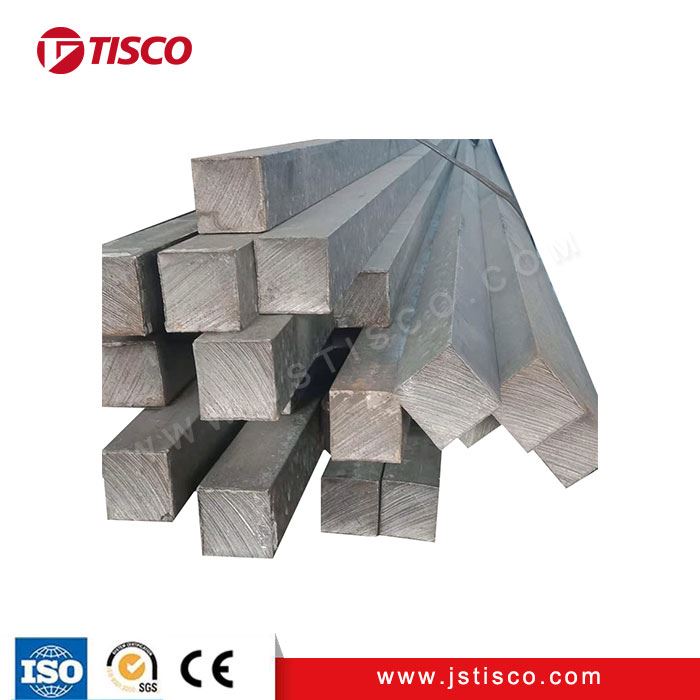

AISI 1020 Carbon Steel Round Bar
AISI 1020 is a low-carbon steel with good weldability and machinability. It has a relatively low yield strength compared to some other types of carbon steel. The yield strength of AISI 1020 Carbon Steel Round Bar is typically around 35,000 psi (pounds per square inch) or 240 MPa (megapascals).
Q235 Carbon Steel Round Bar
Q235 is a commonly used carbon steel in China. It has a yield strength of around 235 MPa, which is where its name comes from. The Q235 Carbon Steel Round Bar is widely used in construction and general engineering applications due to its good combination of strength and cost.
Q235B Carbon Steel Square Bar
Q235B is a grade of Q235 steel with better impact resistance. The Q235B Carbon Steel Square Bar has a similar yield strength to Q235, around 235 MPa. It is often used in structural applications where a certain level of strength and toughness is required.
Why Yield Strength Matters in Carbon Steel Bars
The yield strength of carbon steel bars is crucial in many applications. Here are some reasons why:
Structural Integrity
In construction and engineering, carbon steel bars are used to provide structural support. The yield strength of the bars determines the maximum load they can withstand without undergoing permanent deformation. Ensuring that the bars have an appropriate yield strength is essential for the safety and stability of the structure.
Design and Engineering
Engineers need to know the yield strength of carbon steel bars when designing structures and components. By using materials with the right yield strength, they can optimize the design to meet the required performance and safety standards while minimizing the use of materials and cost.
Quality Control
For manufacturers and suppliers of carbon steel bars, monitoring the yield strength is an important part of quality control. By ensuring that the bars meet the specified yield strength requirements, they can provide high-quality products to their customers.
Conclusion
In conclusion, yield strength is a critical property of carbon steel bars. It determines the material's ability to withstand loads without permanent deformation and plays a vital role in various applications. As a carbon steel bar supplier, we understand the importance of providing high-quality bars with consistent yield strength. Whether you're working on a construction project or manufacturing machinery components, choosing the right carbon steel bar with the appropriate yield strength is essential for the success of your project.
If you're interested in purchasing carbon steel bars or have any questions about their yield strength or other properties, please feel free to contact us. We're here to provide you with the best products and services to meet your needs.
References
- Callister, W. D., & Rethwisch, D. G. (2017). Materials Science and Engineering: An Introduction. Wiley.
- ASM Handbook Committee. (2005). ASM Handbook, Volume 1: Properties and Selection: Irons, Steels, and High-Performance Alloys. ASM International.