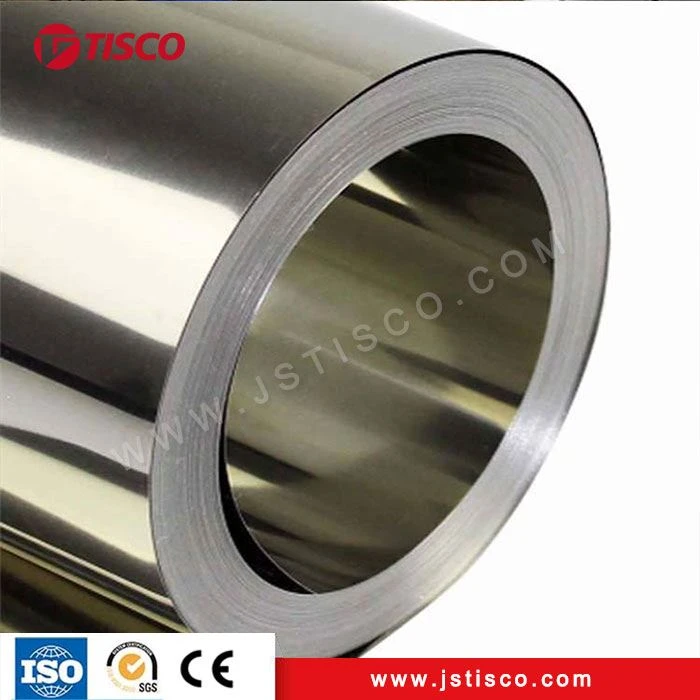
Martensitic stainless steel has a body centered cubic crystal structure with a wide range of properties and can be used in stainless steel engineering steel, stainless steel tool steel and creep resistant steel. They are magnetic and are not as resistant to corrosion as ferritic and austenitic stainless steels due to their low chromium content.
They fall into four categories (with some overlap):
Fe-Cr-Ni-C grades.
Some carbon is replaced by nickel. They provide higher toughness and higher corrosion resistance. EN 1.4303 class, containing 13% Cr and 4% Ni, is widely used in Pelton, Kaplan and Francis turbines for hydropower stations because of its good casting, weldability and cavitation resistance.
Fe-Cr-C grades. These were the first grades used and are still widely used in engineering and wear-resistant applications.
Creep-resisting grades. Small additions of niobium, vanadium, boron, and cobalt increase the strength and creep resistance up to about 650 °C (1,202 °F).
Precipitation hardening grades. Grade EN 1.4542 (also known as 17/4PH), the best-known grade, combines martensitic hardening and precipitation hardening. It achieves high strength and good toughness and is used in aerospace among other applications.